Introduction
Realizzare un servizio in Java che calcola i valori di una data espressione matematica:sin(x) + cos(√3 · x)
Requirements
	1. Realizzare un servizio Java che calcoli i valore corrispondente di una espressione data
	2. Un utente deve essere in grado di ricevere il valore corrispondente al valore x richiesto
	3. La ricezione deve avvenire via WebSocket, ma anche HTTP1 e HTTP2
    4. Il deployment del gioco deve avvenire mediante Docker.
Requirement analysis
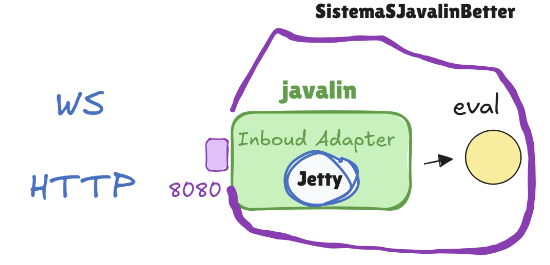
Problem analysis
Test plans
		//on init test della connessione WS
		callWS("0.0")
		//test HTTP Post/Get
		testHTTPGet()
		testHTTPPost()
Test della connessione WebSocket
		function  callWS(msgtosend){
			/*1*/const socketWS =
			  new WebSocket("ws://localhost:8080/eval");

			/*2*/socketWS.onopen = () => {
				console.log("callWS | Connesso a eval");
				socketWS.send(msgtosend);
			  }

			/*3*/socketWS.onmessage = (event) => {
				console.log("callWS | onmessage:",event.data);
			  }
			}//callWS
Testing HTTP get in javascript
			async function testHTTPGet() {
				try {
				const url = 'http://localhost:8080/eval?x=-4';
				const response = await fetch(url);

				// Controlla se il server ha risposto con un errore (es. 404 o 500)
				if (!response.ok) {
					throw new Error(`Errore del server: ${response.status}`);
				}
				//const data = await response ;
				const data = await response.json(); // Converte la risposta da JSON a oggetto JS
				console.log('testHTTPGet | Dati ricevuti con successo:', data);
				} catch (error) {
				console.error('testHTTPGet | Errore:', error);
				}
			}
Testing HTTP post in javascript
		  async function testHTTPPost() {
			  try {
				  const url = 'http://localhost:8080/evaluate';
				  const response = await fetch(url, {
					  method: 'POST', // Specifica il metodo
					  headers: {
						  'Content-Type': 'application/json' // Dice al server che stiamo inviando JSON
						  // 'Authorization': 'Bearer IL_TUO_TOKEN' // Aggiungi questo se serve autenticazione
					  },
					  body: JSON.stringify({ x : 4.0 }) // Converte l'oggetto JS in una stringa JSON
				  });
				  console.log('testHTTPPost | Sent:' );

				  const result = await response.json();
				  console.log('testHTTPPost |  result=', result);
			  } catch (error) {
				  console.error('testHTTPPost | Errore durante il caricamento:', error);
			  }
		  }
 GIT repo: https://github.com/GregorioBussolari/iss2026Unibo.git